Add solvent slowly along the inner wall of the vial to minimize foaming or peptide denaturation
These cells carry oxygen around our bodies
The ideal temperature range is between 2C and 8C (36F and 46F)

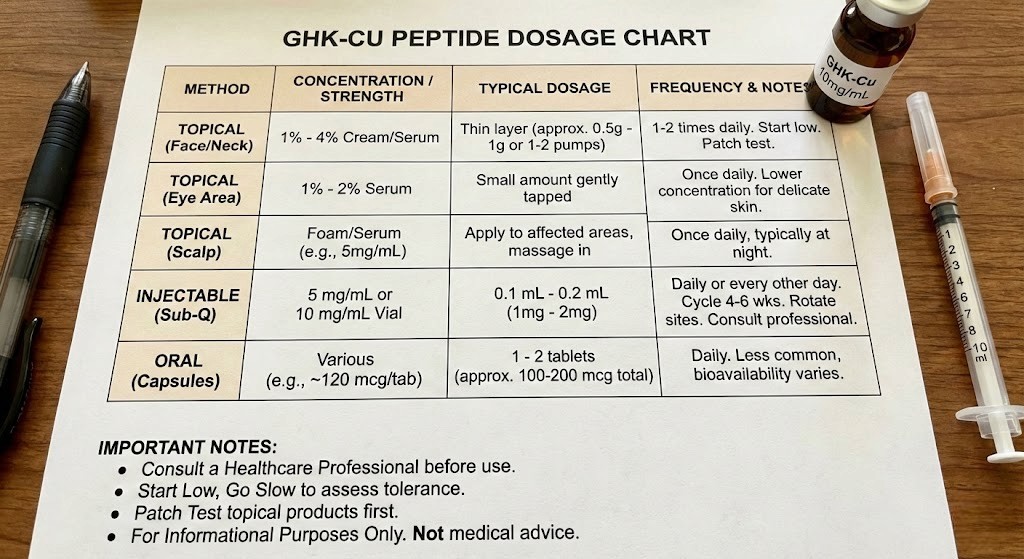
Additional Monitoring May Be Considered In: Higher-frequency regenerative research protocols Long-duration experimental protocols Multiple concurrent regenerative or metabolic-support compounds Significant peptide-sensitivity research models Liver-function or copper-metabolismrelated investigations Research models involving copper- or zinc-balance investigations Avoid or Carefully Evaluate In Research Models With: Known hypersensitivity to peptide compounds Active severe systemic illness Severe uncontrolled metabolic or neurological conditions Active or suspected cancer-, tumor-, or abnormal proliferative research models Pregnancy or breastfeeding contexts Additional Research Considerations Because GHK-Cu is a copper-binding peptide, prolonged or higher-frequency research exposure may influence: Copper- and zinc-related biomarker pathways Oxidative-stress regulation mechanisms Skin-related and regenerative-response variability Tissue-remodeling and collagen-related signaling pathways Research protocols commonly investigate the inclusion of: Zinc supplementation Vitamin C supplementation alongside GHK-Curelated research models because of their involvement in: Collagen-related pathways Antioxidant-support mechanisms Skin-integrity and tissue-maintenance signaling Physiological-resilience pathways Research involving regenerative and tissue-remodeling pathways remains ongoing, particularly within broader investigations involving cellular-response, oxidative-stress regulation, and tissue-maintenance mechanisms
Diskrete Verpackung & Sehr gute Qualitt
We tailor the treatment regimen based on several factors such as the severity of the deficiency, the patients overall health condition, and their capacity to absorb Vitamin B12