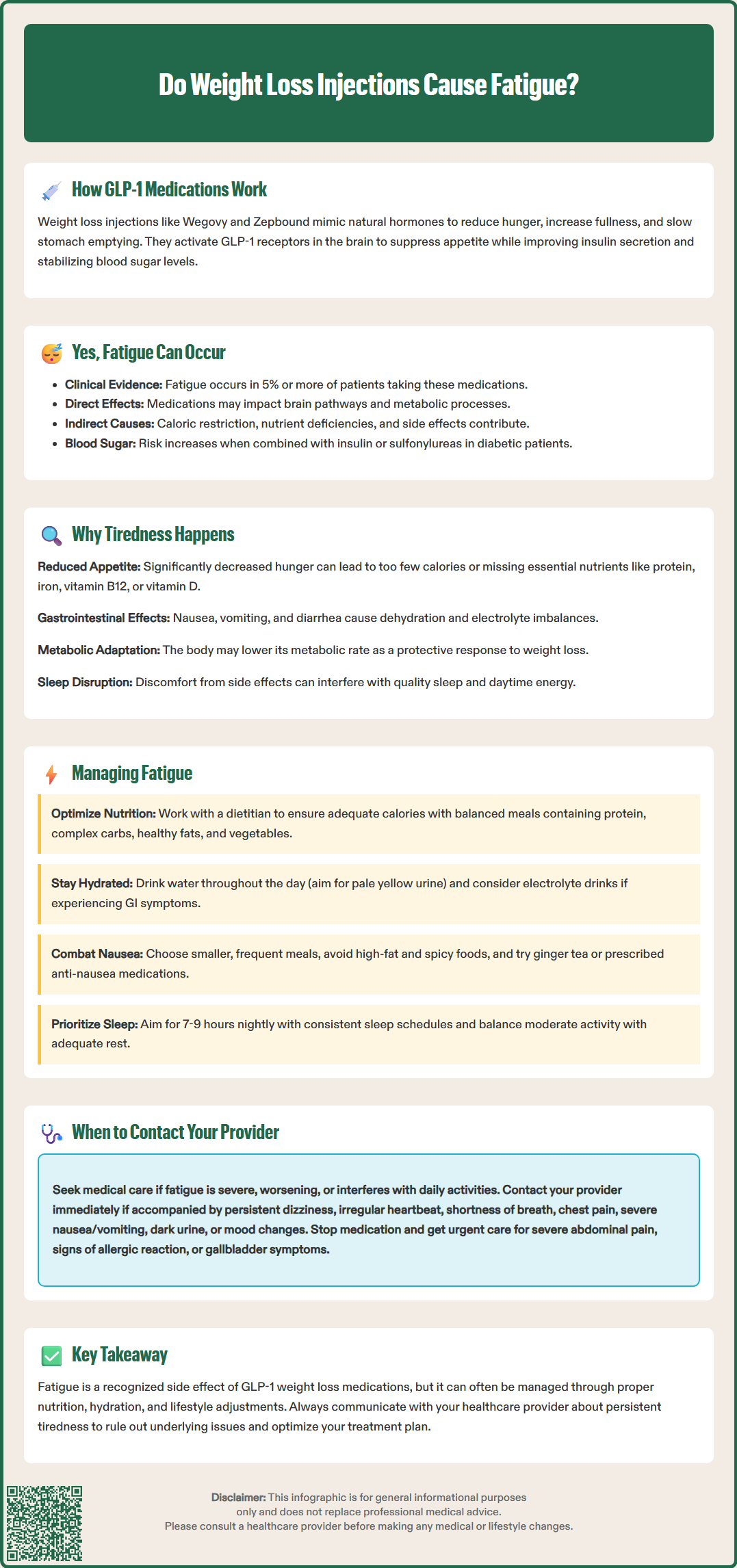
Contact your GP or diabetes specialist if you experience: Severe or worsening fatigue that significantly impairs daily functioning or persists despite self-management strategies Signs of dehydration including dark urine, dizziness, rapid heartbeat, or confusion Symptoms suggesting hypoglycaemia (low blood glucose) such as shakiness, sweating, confusion, or palpitations, particularly if you take insulin or sulfonylureas Persistent nausea or vomiting preventing adequate food or fluid intake Unintentional, rapid, or concerning weight loss , or inability to maintain adequate nutrition Symptoms of nutritional deficiency including pale skin, shortness of breath, tingling in hands or feet, or muscle weakness Seek urgent medical attention if you develop: Severe, persistent abdominal pain (with or without vomiting) may indicate pancreatitis Right upper abdominal pain, fever, or yellowing of skin/eyes possible gallbladder problems Severe dehydration or significantly reduced urination risk of kidney problems Signs of allergic reaction such as rash, swelling, or difficulty breathing Your GP may recommend blood tests to assess for anaemia, thyroid function, kidney function, and other causes of fatigue based on your symptoms

GLP-1 Support Fiber features 15 grams of fiber per serving to support digestion, along with the antioxidant-rich Natureknit fruit and vegetable fiber, Inavea acacia fiber, and Fibersol-2, which is clinically evidenced to support GLP-1 activity
Safety and efficacy of repeated-dose intravenous ketamine for treatment-resistant depression
568 In various autoimmune diseases, proinflammatory T cells have higher lipid contents than healthy individuals do
1 Despite growing adoption and inclusion in global guidelines recognizing obesity as a chronic disease requiring extended management, evidence on outcomes after cessation of GLP-1 therapy is limited and heterogeneous
One is that GSSG and GS-X produced in cardiomyocytes are pumped out by multidrug resistance protein 1 (MRP1), preventing GSSG or GS-X accumulation in cardiomyocytes [33, 34], and subsequently enter the -glutamyl cycle